
'It disappoints and saddens me no end that Mahua has allowed herself to be carried away by the Goebbelsian onslaught mounted on the BJP and Narendra Modi by certain vested interests which find themselves exposed and thrown out of the gravy train,' says B S Raghavan, the distinguished civil servant.
Has the Modi government ensured that the MEA keeps abreast of the times, asks Ambassador Vivek Katju.
The problem is to integrate the technology with a system of household level segregation so that waste does not end up in landfills, but is processed and reused.

The RBI governor-designate may be economical with spoken words, but is known for his sharp and critical writings
'Greenpeace has been brutal in targeting both India and the Manmohan Singh government. The push to go after Indian coal is driven by its long-term agenda. What is surprising is that China has not been meted out the same treatment, despite the fact that the rise of China as an economic power has been built around generating power from coal. 'Being richer and more affluent, yet far less democratic, there is less room for an NGO such as Greenpeace to drive home a complicated global agenda, so there is more of a tendency to go along with anything the Chinese offer despite China being the biggest by far with regard to coal use. But for India, it reserves tougher prescriptions, notably for its middle class, says Srinivas Bharadwaj.

'We should expect a cold-blooded, transactional relation that requires a lot of engagement and mutual trust to sustain,' says Constantino Xavier, Fellow, foreign policy, Brookings India.

The Summit comes at a time when China is flexing its muscle to tighten its grip over the disputed South China Sea.
'India appears to have stood its ground on strategic autonomy by resisting US pressure on Russia, China and Iran, but succumbed to the temptation to walk into a tighter embrace in defence cooperation, a high priority of the Trump administration,' notes Ambassador T P Sreenivasan.

Prime Minster Narendra Modi's op-ed in the German daily Frankfurter Allgemeines talks about development, New Age India and his 'Make in India' campaign. Here's the complete text of the column.

Here's the full text of President Ram Nath Kovind's customary address to the joining sitting of Parliament on the first day of the budget session.
Using available government data, the team is targeting $30-40 billion worth of iron and steel products that are imported into India.

'The India-France relationship has been that of the elites of two countries, who appreciate each other's philosophical traditions -- whether it is ancient Indian civilisation and Sanskrit texts or the French tradition of Rene Descartes, Albert Camus, (Jean-Paul) Sartre... This is a drawback. It doesn't create the buzz, the excitement necessary for a relationship. We need more people-to-people contact, especially among students,' says former Ambassador to Paris, Rakesh Sood.

India must formulate a new growth path to become a top Asian economy.

In remarks titled 'Implement Consensus and Handle Differences Properly to Bring China-India Relations Back on the Right Track' posted on the Chinese embassy website, Sun spoke of disruptions in the bilateral relationship and outlined five steps to clarify 'some fundamental points'.

The Planning Commission has not been central to the policy making process since the mid-1960s, says Nitin Desai.

'She dwarfs every known politician of recent times with her imperious aura, iron will, tremendous drive, dauntless pursuit of goals she set before herself, ability to capture the people's imagination and unshakeable grip over her party and government,' says B S Raghavan, the distinguished civil servant.

'Progress demands regular senior-level attention from American leaders.' 'A leaders' summit is great, but we need sustained engagement to continue to forge new agreements and find new areas of cooperation.'

'This is the first time that the Americans have agreed to refer to "cross-border terrorist attacks" in a joint statement.' 'No wonder Pakistan has called the joint statement "singularly unhelpful" and has blasted it, and its all-weather friend China has applauded Pakistan's frontline role in combating terrorism,' points out former foreign secretary Ambassador Kanwal Sibal.
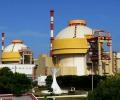
'Decisions on nuclear power have so far been taken by a small select group, primarily interested in profiteering from their actions, stating 'secrecy' as necessary from the national security point.' 'This argument is false, because we are dealing with the 'civilian' nuclear power sector, which is open even to the IAEA,' says Dr A Gopalakrishnan, former chairman of the Atomic Energy Regulatory Board.

Compliance requirements, valuation, input tax credit transfers are likely to lead to tax litigation, says Sayan Ghosal.

President Pranab Mukherjee addressed a joint session of Parliament ahead of the budget session which began on Tuesday. Here are the highlights of President Pranab Mukherjee's speech:

Both Obama and Modi have taken bold steps towards laying the groundwork to give a big push to Indo-US trade, and now it's time to execute, says Bikash Mohapatra.

President Xi Jinping on Tuesday pushed China's free trade vision for the Asia Pacific region and asked APEC to "break open closed doors" as leaders of the grouping held talks on forging consensus over opening up commerce in the resource-rich and economically dynamic region.

He designed some of India's most iconic buildings.

It is important the SCO focus strongly on economic development and regional integration that leads to greater benefits for the least developed regions of member-countries, writes Sana Hashmi.

Prime Minister Narendra Modi on Tuesday said Australia will not be at the periphery of India's vision but at the centre of its thought, as he called for closer bilateral security cooperation and a comprehensive global strategy to tackle the menace of terrorism.

Raising the issue of Balochistan for the first time before the United Nation, India on Wednesday accused Pakistan of widespread human rights violations there as well as in Pakistan-occupied Kashmir.

'It is the government's most important duty to ensure that when war breaks out, the armed forces are absolutely ready to face the adversary -- well equipped, well trained and in high spirits,' says Brigadier Gurmeet Kanwal (retd).

Moving ahead with their new mantra -- Chalein Saath Saath: Forward Together We Go -- Prime Minister Narendra Modi and United States President Barack Obama on Tuesday vowed to deepen cooperation in every sector for the benefit of global stability and people's livelihoods over the next ten years.

Thousands of flag-waving Thai protesters stormed more government buildings as they intensified their mass political rally against embattled Prime Minister Yingluck Shinawatra for a fourth day on Wednesday, plunging the polarised nation deeper into crisis.

"I am an academic and I have always made it clear that my ultimate home is in the realm of ideas," Rajan said in a letter to staff.

'Everybody says 5G and communication is important.' 'Everybody says automation, robotics, human computing interfaces -- people and machines working together -- is the future.' 'Everybody agrees that cybersecurity is something that is here to stay.' 'Everybody agrees that synthetic biology is important.' 'Instead of outlining thinking about industries for tomorrow and the future, let the evolutionary pathway be built in a way that it promotes robust, creative, thinking.'
Policy discussions now should urgently focus on the road map for serious economic and institutional reforms to put India on a sustained high growth trajectory like the Chinese economy, says Jayanta Roy.

The differences between the US and China over rival free trade agreements being floated by them threatened to derail the APEC Summit which got off to a colourful start in Beijing China on Monday.

Diplomats agree that amid stormy relations with China and Pakistan, Modi has posted impressive foreign policy successes, notes Aditi Phadnis.

'Nehru is often portrayed as a visionary with his head in the clouds. But he had his feet firmly planted on the ground when it came to building and nurturing institutions and setting them on the right path with the right traditions,' says B S Raghavan.

Instead of a consumption stimulus the government must address the NPA issue with a war footing and invest in infrastructure, affordable housing and exports, says Sanjeev Nayyar.

Recent incidents suggest these safeguards perform well in simulated conditions and mock drills, but often fall short when actual threats emerge.

Following is the full text of Prime Minister Manmohan Singh's speech at the Central Party School in Beijing on Thursday:

'Implementation of the US-India Defence Technology and Trade Initiative is as much a test for the Modi government to direct its bureaucratic processes, as it is of US commitment,' says Lieutenant General Anil Chait (retd).
